The Quiet Luxury of Polki Jewellery
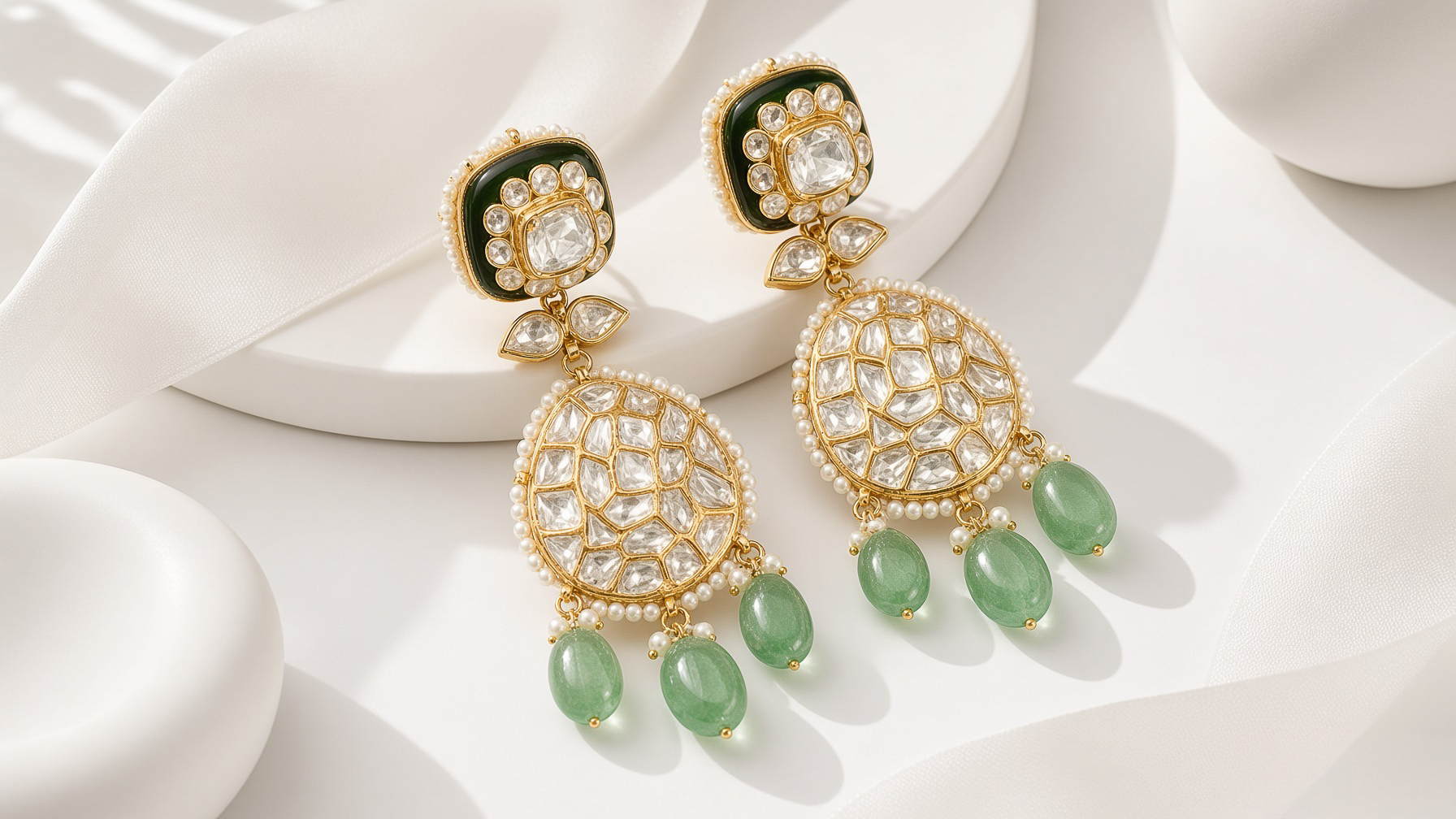
Polki does not announce itself. Where a brilliant-cut diamond throws light back at the room, an uncut polki diamond holds it — a soft, inward glow that reads less like sparkle and more like depth. It is the difference between being noticed and being remembered.
The technique is among the oldest in Indian jewellery. Uncut diamonds are set into gold using jadau — no prongs, no solder — the metal worked by hand around each stone. Centuries ago this was the language of royal courts; the craft survives in a small number of ateliers where it is still practised the slow way.
What has changed is the eye. Contemporary polki keeps the uncut stone but rethinks proportion and weight — chokers that sit as easily with plain silk as with bridal red, earrings light enough for a long evening. Tradition, edited rather than preserved behind glass.
For a wedding, a full polki set carries the ceremony on its own; little else is needed. For the everyday, a single element — a pendant, a pair of earrings — brings the same character without the occasion. The rule is simple: let one piece speak.
If you are seeing polki for the first time, look closely at the stones' irregular faces. No two are alike, because no two were cut to be. That is not a flaw of the craft. It is the point of it.
Curious to see the pieces up close?
Book a Consultation