The Right Necklace: A Guide to Chokers, Cascades and Pendant Styles
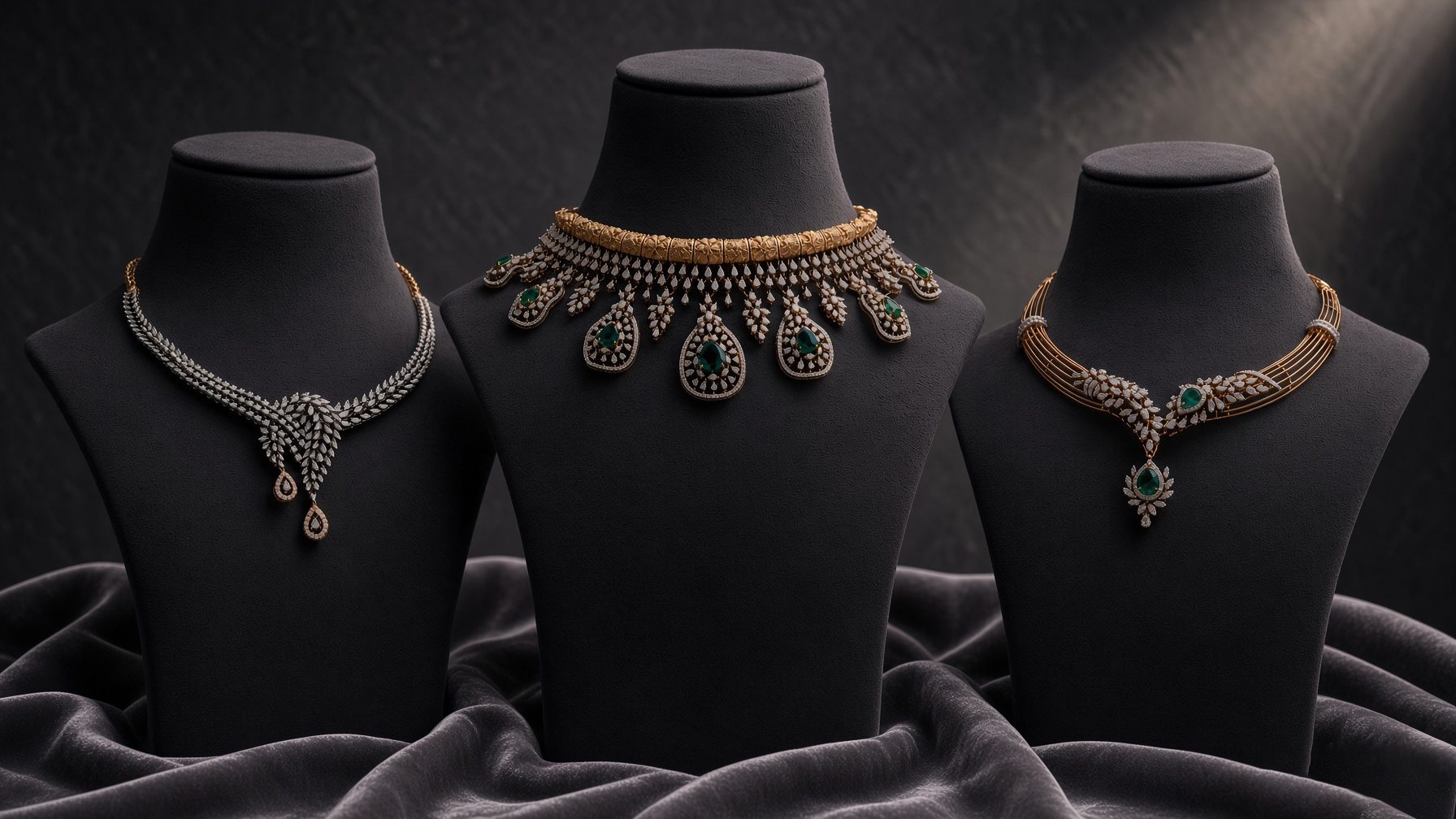
Of every piece in a jewellery wardrobe, the necklace carries the most presence. It sits at the centre of the frame — in conversation, in photographs, in memory — and it is usually the first thing noticed and the last thing forgotten. Choosing one well is not about following a trend; it is about understanding what each form was made to do.
The choker sits high and close, and because of that it is the most architectural of necklaces. A polki choker — uncut diamonds set in the old jadau technique, often finished with emerald drops — brings a ceremonial gravity that suits bridal wear, high necklines and bare shoulders alike. It does not decorate an outfit so much as crown it, and it asks the rest of the look to make room.
At the other register is the diamond line necklace: a river of light along the collarbone. Its strength is versatility. Worn alone it is quiet enough for a dinner; layered with a longer chain it becomes evening wear. When judging one, look for how the stones graduate in size and whether the piece moves fluidly across the skin — a well-made diamond necklace should pour, not sit.
Between the two live the shaped necklaces — V-drops, lariats and pendant styles. A single emerald suspended from woven strands of gold, for instance, draws the eye downward and lengthens the neck, which is why these forms flatter deep necklines and open sari drapes. They are also the most forgiving choice when you are buying for someone else and cannot be certain of their preference.
So how does one choose? Begin with the occasion, then the neckline, then the mirror. High collars and boat necks ask for length; strapless and deep cuts give a choker its stage. Consider your face as well — rounder faces are lengthened by drops, while longer faces are softened by pieces that sit wide. And remember proportion: a grand choker needs little else on the body. Let one piece speak and let the others whisper.
Whatever the form, judge the making before the sparkle. Turn the necklace over: the reverse should be as finished as the front, the settings even, no edge sharp enough to catch silk. The clasp should close with certainty, and the piece should feel balanced in the hand rather than merely light. Real diamonds and natural emeralds carry documentation — ask what paperwork accompanies the piece, and expect a direct answer.
Most of all, a necklace should feel inevitable once it is on — as if it had always belonged there. If you are weighing a choker against a cascade, or choosing a piece to mark an occasion, that is precisely what a private consultation is for: an unhurried hour, the pieces in your hands, and honest guidance on which one belongs with you.
Curious to see the pieces up close?
Book a Consultation